
2026-09-17 · Ethan Becker
Tick Prevention Tips for Jefferson City Yards and Hiking Trails
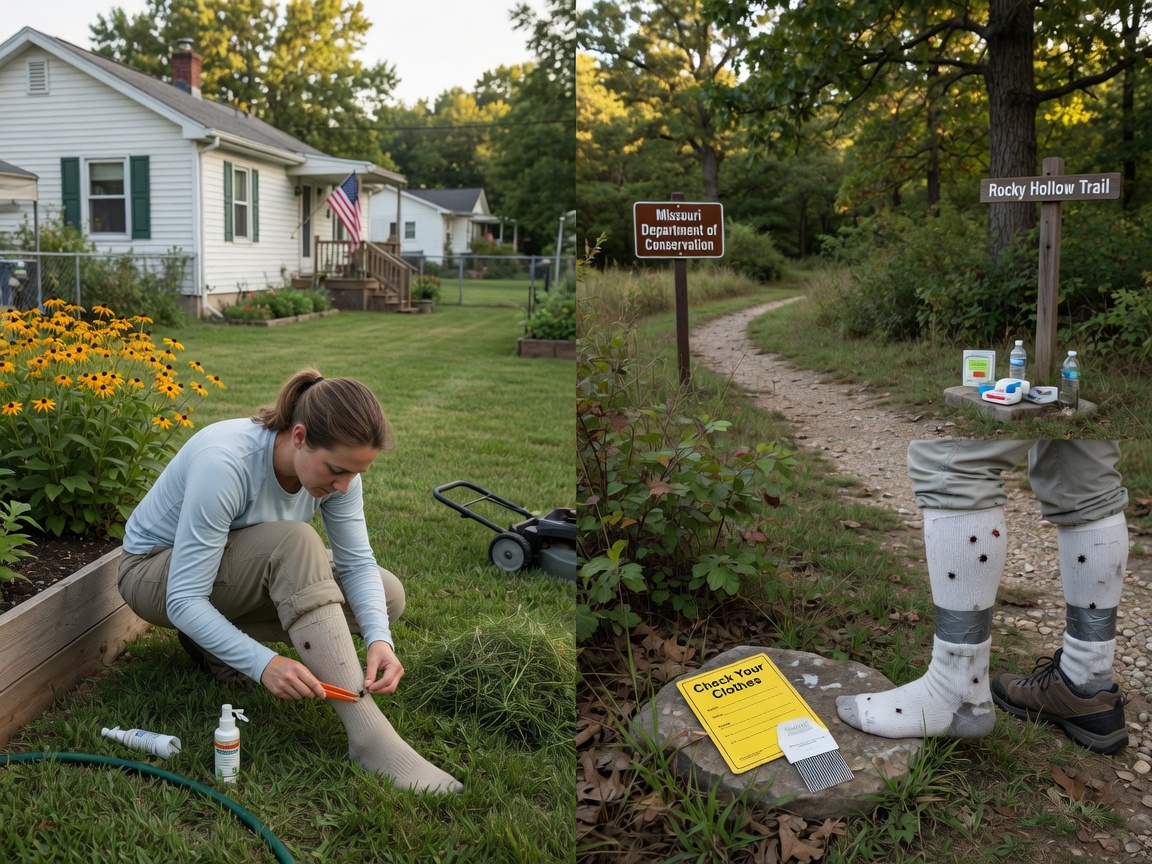
Ticks appear most often in Jefferson City from April through October because the humid continental climate brings hot summers that keep leaf litter and tall grass moist enough for questing. Homeowners in Downtown and East Jefferson City see higher numbers near older foundations and wooded edges that border the Missouri State Capitol grounds and Jefferson Landing State Historic Site. Keeping grass below four inches, clearing leaf piles within ten feet of structures, and trimming shrubs above ground level removes the humidity ticks need to survive the 8–12 week peak activity periods.
Yard Maintenance That Reduces Tick Habitat in Cole County
Cole County properties often sit on clay-heavy soils that hold moisture after spring rains, so standing water and dense ground cover near fences become reliable tick nurseries. Mow weekly during May through September and bag clippings instead of leaving them as mulch. Create a three-foot gravel or wood-chip barrier between lawns and wooded lots; this strip dries quickly and forces ticks to cross open ground where they desiccate. Remove bird feeders from the immediate yard perimeter because fallen seed draws rodents that carry immature ticks. In East Jefferson City neighborhoods with mature trees, prune lower branches so sunlight reaches the soil and lowers relative humidity by 20–30 percent on summer afternoons.
Trail Habits Around Jefferson City Landmarks
Hiking trails near the Missouri Governor’s Mansion and Jefferson Landing State Historic Site run through shaded river-bottom corridors where white-tailed deer and small mammals drop ticks onto leaf litter. Wear light-colored long pants tucked into socks and apply 20–30 percent DEET to clothing rather than skin. Pause every 20–30 minutes to check pant legs and shoes; nymphs are pinhead-sized and easy to miss on dark fabric. Stick to the center of established paths instead of brushing through tall grass or low brush. After returning home, tumble dry clothes on high heat for 15 minutes before washing to kill any ticks that hitchhiked back from Columbia or Sedalia day trips.
Seasonal Timing and Climate Effects on Local Tick Pressure
Cold winters in Jefferson City drop temperatures below freezing for weeks at a time, which kills many adult ticks but leaves protected eggs and nymphs in insulated leaf piles. Activity restarts once daytime highs reach 50 degrees, usually mid-March, and accelerates after the first 70-degree stretch in May. Hot, humid July and August push ticks into shadier micro-habitats such as north-facing slopes and crawl-space entrances. Homeowners who perform a thorough yard cleanup in late February and again in early October interrupt two full generations before they reach biting stage. Properties within two miles of the Missouri River experience slightly longer active seasons because river humidity buffers both spring warming and fall cooling.
Connecting Tick Work to Other Seasonal Pest Patterns
Tick prevention overlaps with early-season ant scouting because both pests exploit the same leaf-litter edges around older Cole County homes. What Jefferson City Homeowners Should Know About Spring Ant Activity explains the timing overlap and shows how clearing debris helps both problems. Outdoor mosquito treatments also reduce tick questing sites when applied to tall grass borders. Mosquito Treatment crews already target the shaded transition zones where ticks wait for hosts. Residents in Pest Control in East Jefferson City can combine these steps with routine perimeter checks to keep multiple pests from establishing around the same foundation lines.
Practical Follow-Up Steps After Outdoor Exposure
Shower within two hours of returning from trails or yard work and use a full-length mirror or handheld mirror to inspect behind knees, under arms, and along the hairline. Save any removed tick in a sealed bag with the date and location for later identification if symptoms develop. Reapply wood-chip barriers each spring before Memorial Day and again after leaf drop in November. These repeated, low-cost actions keep tick pressure low on Jefferson City properties without relying on chemical applications every month.