
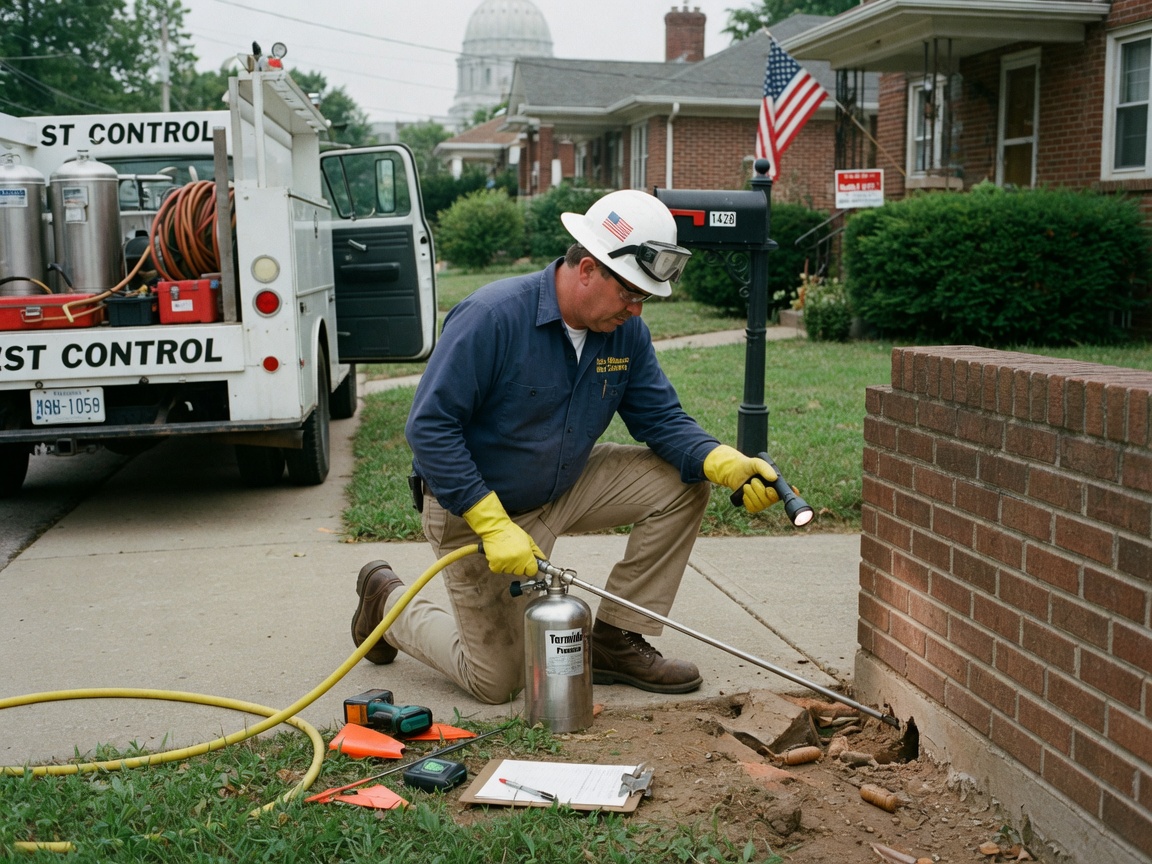
Jefferson City's humid continental climate drives peak subterranean termite activity from late spring through early fall, especially in the older brick and frame homes clustered in Downtown and East Jefferson City. These neighborhoods feature many pre-1970 structures with crawl spaces and pier-and-beam foundations that trap moisture after heavy spring rains, creating ideal conditions for colonies traveling from nearby wooded lots. Technicians must account for the clay-heavy soils common across Cole County, which slow liquid termiticide penetration and often require foam or bait alternatives to reach active galleries.
Homes near the Missouri Governor's Mansion and Jefferson Landing State Historic Site frequently have limestone foundations and original wood framing that termites exploit through small expansion cracks. Treatments here demand careful application to avoid disturbing historic materials while still creating a continuous barrier. Properties closer to Columbia or Sedalia see similar pressure but often on larger lots with more perimeter access, allowing faster perimeter drilling compared to tight urban lots in central Jefferson City.
Winter freezes do not eliminate colonies but push survivors deeper into protected voids, so follow-up inspections after the first thaw are essential. Technicians carry moisture meters and borescopes to check sill plates and rim joists without unnecessary demolition, and they coordinate with homeowners on ventilation improvements that reduce future risk in these older stock homes.
Technician insight
In Jefferson City the thing that catches most people out with termite problems is the combination of older brick homes in Downtown that sit on clay soil and have poor crawl space airflow after our cold winters. Moisture lingers under those floors through spring, letting colonies move right up the piers before homeowners notice anything in the finished spaces.
Crawl Space Colony Near Missouri Governor's Mansion
Homeowner in a 1940s brick house noticed buckling baseboards after a wet summer. Inspection revealed active mud tubes along multiple piers and elevated moisture from blocked vents. Technicians installed a hybrid liquid-foam barrier plus bait stations around the perimeter. Follow-up checks after the first freeze confirmed no new activity and the colony was eliminated.
Termite Exterminator Services We Offer
✓Subterranean Termite Treatment
Liquid and foam applications create a continuous barrier around foundations in clay soils common to East Jefferson City and Downtown properties.
✓Drywood Termite Extermination
Localized wood treatments and spot fumigation address drywood colonies that appear in older framing near the Missouri State Capitol district.
✓Termite Bait Station Installation
In-ground bait stations provide ongoing colony elimination suited to homes with limited perimeter access or historic landscape restrictions.
✓Crawl Space Termite Inspection
Detailed moisture and mud-tube checks in pier-and-beam foundations typical of pre-war Cole County residences.
✓Pre-Construction Soil Treatment
Termiticide application during new builds or additions to prevent colony establishment in areas with high water tables near Jefferson Landing.
✓Annual Termite Monitoring Program
Quarterly station checks and reporting for properties in flood-prone sections of East Jefferson City.
Termite Exterminator Cost in Jefferson City, MO
| Service | Typical Range | What Affects It |
|---|---|---|
| Comprehensive Termite Inspection | $175–$325 | Higher for multi-story or limited-access homes in Downtown |
| Subterranean Barrier Treatment | $1,200–$2,400 | Varies with perimeter length and soil conditions in East Jefferson City |
| Bait Station System | $900–$1,800 | Includes initial install and first year of monitoring |
| Drywood Spot Treatment | $450–$950 | Depends on number of affected timbers |
Ranges are typical for Jefferson City, MO and confirmed with an exact written quote before any work starts.
How it works
- 1
Initial Property Walk-Through
Technician examines exterior grading, foundation vents, and any visible mud tubes while noting nearby tree lines or irrigation that affect Cole County lots.
- 2
Detailed Interior and Crawl Inspection
Moisture readings and probing of sill plates in older Downtown homes to map active galleries without invasive cuts.
- 3
Custom Treatment Application
Selection of liquid, foam, or bait based on soil type and access constraints around historic structures.
- 4
Follow-Up Monitoring
Scheduled re-inspections after seasonal shifts to confirm colony decline and adjust stations as needed.
Pricing
Most Jefferson City termite jobs fall into inspection or full treatment categories; final cost depends on square footage, foundation access, and whether bait or liquid methods are required.