
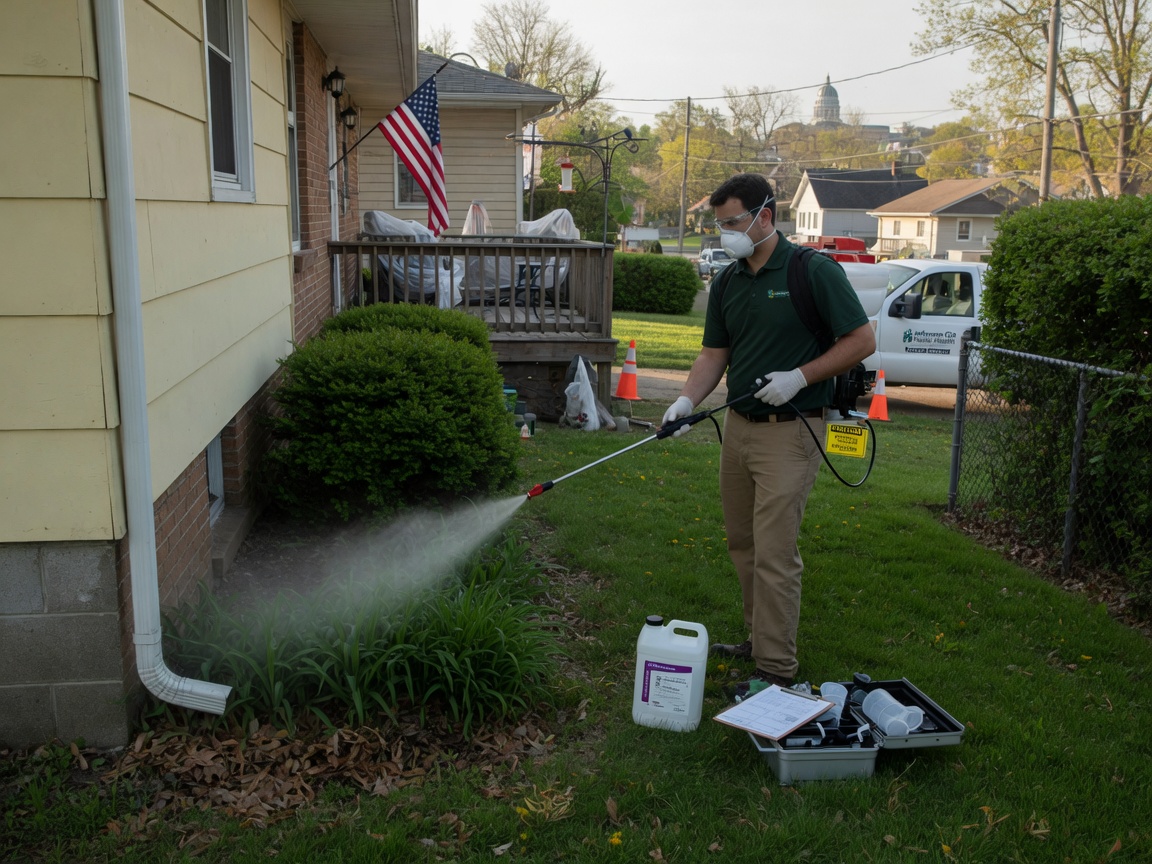
Jefferson City’s humid continental climate brings hot, humid summers that allow mosquitoes to breed rapidly in standing water around older brick and frame homes common in Downtown and East Jefferson City neighborhoods. Properties near the Missouri State Capitol and Jefferson Landing State Historic Site often have shaded yards, gutters, and low spots where water collects after storms, creating persistent sources that standard sprays miss. Treatment must focus on source reduction plus targeted applications that hold up through the season rather than quick knockdowns that fade after a week of heat.
Cold winters in Cole County kill off adult mosquitoes but leave eggs in protected locations such as tree holes, crawl spaces, and drainage areas around historic buildings. When spring warming arrives, those eggs hatch quickly, especially in yards close to the Missouri River corridor. Homeowners in these areas frequently see early-season activity that spreads to neighboring lots if breeding sites are not addressed before Memorial Day. Effective programs combine larvicide in water sources with barrier treatments on vegetation that mosquitoes use for resting during the day.
Nearby cities like Columbia and Sedalia share similar terrain and weather patterns, but Jefferson City’s mix of older downtown housing stock and river-adjacent properties creates unique challenges. Mature landscaping and frequent irrigation in East Jefferson City neighborhoods keep soil moisture high, extending the active season. Crews must inspect for hidden containers, clogged drains, and low spots that collect water after routine rainfall rather than relying on visible puddles alone.
Technician insight
In Jefferson City, the thing that catches most people out with Mosquito Treatment is how quickly eggs hatch in the shaded, low-lying spots along the river corridor near Jefferson Landing after a warm rain, especially around older homes that still have original gutters and drainage that hold water longer than newer construction.
East Jefferson City Backyard Issue
Homeowner reported heavy evening activity near mature trees and a low corner of the yard. Inspection found water trapped in an old concrete drainage channel and several tree holes. Larvicide was applied to the water sources and a barrier treatment placed on the surrounding vegetation. Follow-up showed a sharp drop in mosquitoes within days.
Mosquito Treatment Services We Offer
✓Breeding Site Inspection and Elimination
On-site survey of yards and structures to locate and treat standing water sources common around older Jefferson City homes and historic sites.
✓Yard Barrier Treatment
Application of residual products to vegetation and perimeter areas to reduce adult mosquitoes entering from nearby riverfront and Capitol grounds.
✓Seasonal Mosquito Control Program
Multi-visit schedule timed to Cole County weather patterns to keep populations low through the hot summer months.
✓Larvicide Application in Standing Water
Targeted treatment of persistent water sources such as gutters, drainage ditches, and low spots that do not dry quickly after storms.
✓Residential Mosquito Fogging
Property-specific fogging that reaches resting areas in dense landscaping typical of East Jefferson City lots.
Mosquito Treatment Cost in Jefferson City, MO
| Service | Typical Range | What Affects It |
|---|---|---|
| Initial Yard Inspection And Treatment | $125–$225 | Depends on property size and number of water sources found |
| Seasonal Barrier Program | $350–$650 | Three to four visits through summer; larger lots or heavy shade increase cost |
| Add-On Larvicide For Multiple Sites | $50–$150 | Charged per extra location requiring treatment beyond standard visit |
Ranges are typical for Jefferson City, MO and confirmed with an exact written quote before any work starts.
How it works
- 1
Property Assessment
Technician walks the yard and inspects common breeding locations around the home, noting drainage issues and shaded areas.
- 2
Source Reduction
Remove or treat standing water and advise on simple fixes that prevent future accumulation.
- 3
Barrier Application
Apply products to vegetation and structure perimeters while avoiding flower beds and play areas.
- 4
Follow-Up Monitoring
Return visits to check results and reapply as needed during peak summer humidity.
Pricing
Pricing varies by lot size, number of breeding sites, and whether a single treatment or seasonal program is chosen.